

Four Key Differences Between Legacy and Headless CMS

A Content Management System (CMS) is far more than a piece of behind-thescenes tech – it’s the engine behind your brand’s content identity. Choosing whether that engine should be a headless or a legacy system can have a profound impact on your business and its future. Unfortunately, discerning the high-tech differences is enough to make anyone’s head spin.
But don’t worry. We’re not here to get lost in the weeds. Because when it comes to what actually matters, there are only four distinctions that really make a difference.
Let’s take it from the top.
Legacy vs. Headless: The Core Difference
A Content Management System (CMS) is a piece of software that allows you to create and manage content for distribution.
Legacy CMS: Old School All-in-One
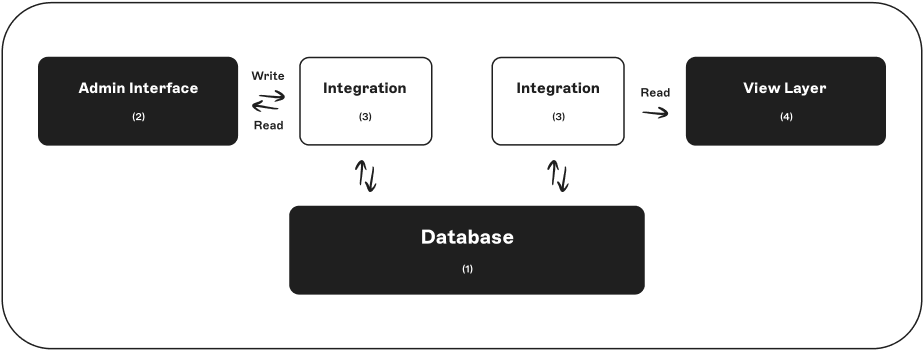
Legacy systems (AKA traditional or monolithic CMSs) keep everything in one neat package. The backend, where content is created, is inseparable from the frontend, where it’s displayed. This tightly coupled, all-in-one architecture is simplistic and designed for one channel only – usually your typical no-frills website, powered by a single basic platform.

Legacy examples: WordPress, Adobe Experience Manager, Drupal.
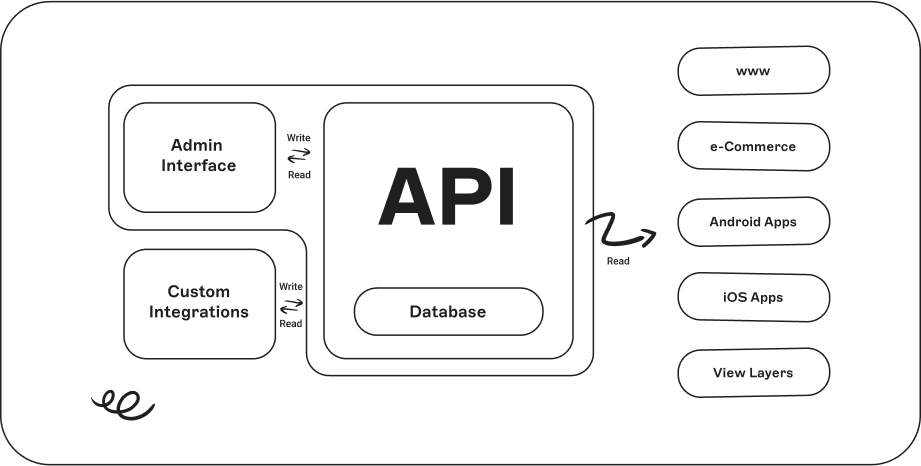
A headless system is a different story entirely. While a traditional CMS is one monolithic system, a headless CMS separates the “body” of a content management system (the backend) from the “head” (the frontend). This grants you an incredible amount of freedom: to build a bespoke tech stack, to create whatever kind of frontend you want, and to send content anywhere – websites, apps, digital displays, smartwatches, voice assistants, you name it.
Headless examples: Storyblok, Contentstack, Sanity
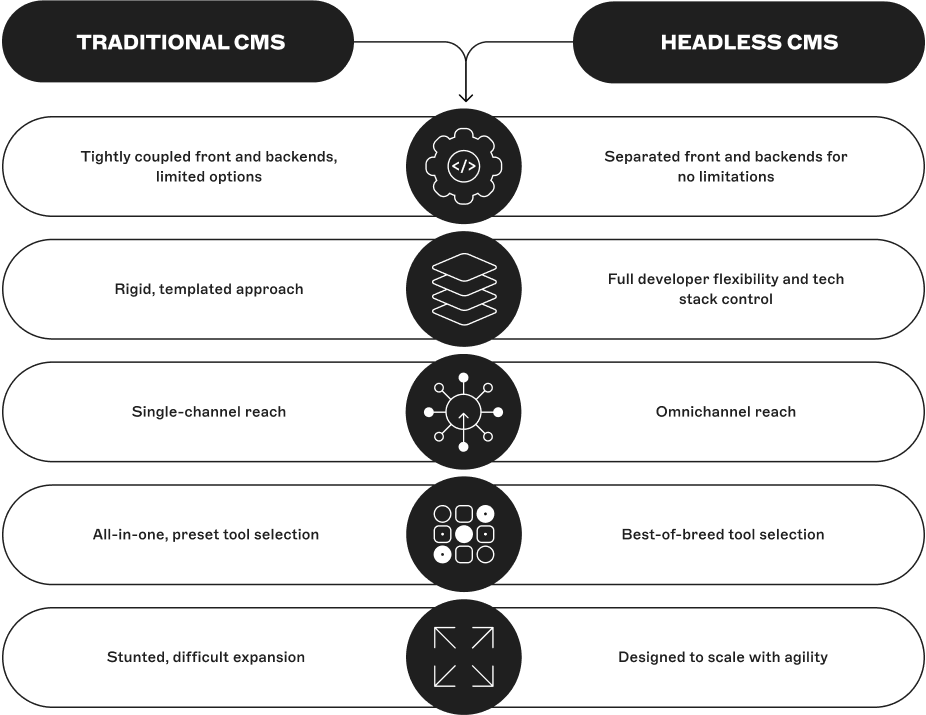

Content and presentation are strictly coupled. You’re stuck creating assets that can only be used one time, on one platform, usually a basic website.
TL;DR: Website content only

Content is stored separately from how it’s displayed. There’s no restrictions on use – or reuse. Push content wherever you need it. Any API-powered tech will be right at home, essentially future-proofing your content delivery strategy.
TL;DR: Publish anything, anywhere, anytime
Clunky code and unnecessary backend processes can slow you down. And since it’s a rigid, monolithic system, you’re stuck with the tech you bought. No chance to optimize, upgrade, or cater to your business’s unique needs.
TL;DR: Permanent tech that can’t keep up and is destined to become outdated

APIs fetch content dynamically for lightning fast page load times. And it gets better: you’re free to further optimize performance by selecting only the tools you need, streamlining your tech stack. And if a shiny new tool promises better performance? No problem just plug it in and keep moving at top speed.
TL;DR: Sleek, flexible future proof tech that can always be reoptimized
Thanks to the tightly woven architecture, legacy systems have their hands tied. They’re not built for flexibility, meaning expanding to new channels is a challenge. Performance bottlenecks, reliance on plugins, and security concerns also mean that it’s hard to support increased traffic with no disruptions.
TL;DR: Restricted scaling with no room for additional traffic

Headless separates content management from content delivery, allowing for fast, flexible distribution across any platform. You can optimize performance with modern infrastructure, eliminate bloated and complex code, and handle high traffic smoothly with a lightweight backend. Plus, you can reuse content, cutting down on how long scaling takes your content teams.
TL;DR: Scale traffic, channels, and content at will
Legacy systems are more vulnerable, leading to a higher chance of security headaches. Since it’s all bundled into one big monolith a breach in one area can compromise your entire infrastructure. Third party plugins and themes requiring constant maintenance only add more doors for hackers to sneak through.
TL;DR: High security risks with multiple routes into your system for hackers

A headless CMS comes with built in peace of mind. Thanks to the naturally modular design and lack of plugins to exploit the surface area of attacks is dramatically reduced. And any particularly powerful attacks that do make it though? They’re quarantined to where they occurred, with the API separation making it impossible to spread.
TL;DR: Less risk of attack with an innate damage control design
Headless vs. Legacy: Who Should Use Which?

Legacy
- Small sites with no plans to grow
- Simple, single channel needs
- Lean teams without dedicated developers

Headless
- Large websites or brands with bold plans for expansion
- A need for multi channel, next gen content experiences
- Teams with devs ready to unlock serious potential